



This website uses cookies so that we can provide you with the best user experience possible. Cookie information is stored in your browser and performs functions such as recognising you when you return to our website and helping our team to understand which sections of the website you find most interesting and useful.
The younger you are when you start putting away a little money for retirement, the more you’ll have when the time comes to stop working, thanks to compound interest.
Social Security Payments
If you receive a paycheck, you will notice money (about 6.5%) of your earnings is deducted (along with other taxes) to pay for social security. That money goes into the Social Security Trust Fund that is used to pay currently retired Americans Social Security benefits (a monthly check). When you reach retirement, you will see the benefits of all workers paying into the same fund. For most people, Social Security alone is not enough to retire comfortably, but it can help a lot.
Get Answers:
This can be hard to predict because there are a lot of factors to consider, such as, at what age you would like to retire, how old you expect to live, and how much you have saved already. Here is a calculator that helps you figure that out.
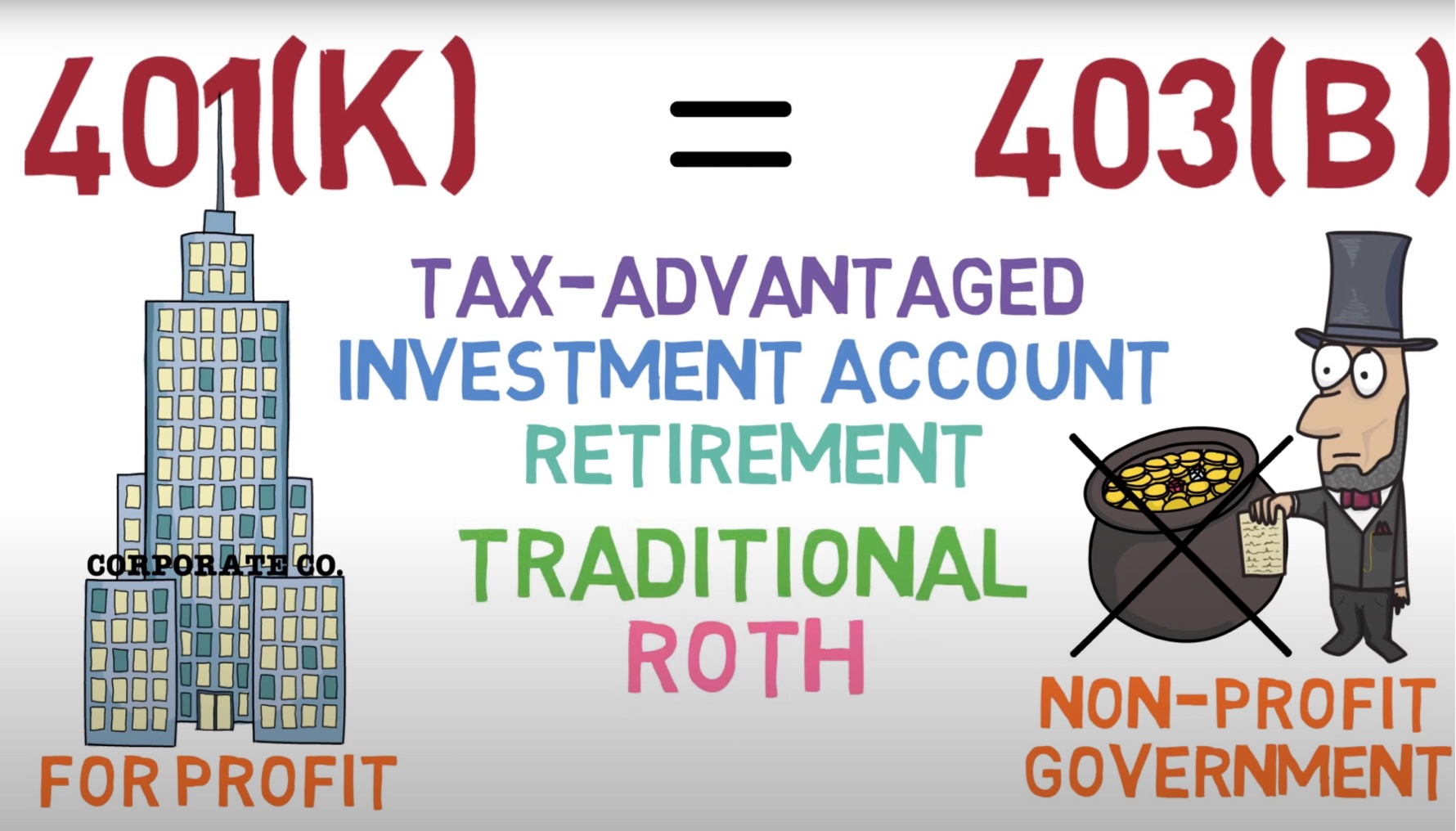
Many employers offer retirement plans as a benefit to working for them. If you work for a for-profit company, the plan is likely called a 401(k) plan and if you work for the government or a nonprofit, it is called a 403(b). These plans invest in the stock market, and are tax-free until you take the money out in retirement. You choose how much money you would like deducted from your paycheck to contribute to your plan, and in many cases your employer will match that amount (up to about 5%)! It is one of the best ways to build up savings for retirement. For those that don’t have this benefit from their employers, an IRA is a similar plan, but will not include an employer match.
All investments contain risk, because you make money when the companies you are invested in do well, and lose money when they don’t. That is why most people invest in a lot of companies at once, called a portfolio. That way the chances are good that some or most companies are doing well, and reduces the risk of a single company costing you money. You can also invest in government bonds, which are very safe, but do not typically give you as much in return. Most people use stock brokers or brokerage firms to handle their investments, because they are experts in monitoring the stock market to look for less risky investments and highest returns for you.
No. There are ways to invest even if it is just a very small amount of money. The most common way for people to start investing is through a retirement plan offered by their employer. In that case you get to decide how much of your paycheck goes into the retirement account.
They may! This is one of the most exciting things about employer-sponsored retirement plans like a 401(k) or 403(b). In addition to deducting money from your paycheck automatically for you and putting it into your retirement plan, they may match what you decide to invest, and that is free money! There are limits, of course, and employers set their own rules on what those are. Many will match 50% of what you put, and most will only match up to about 5% of your paycheck. So if you earn $1,000 every paycheck and decide to set aside 5% for your 401(k) plan and your employer matches that, that means every paycheck you are putting $100 away for retirement.
This is one of the most important aspects of saving for retirement. Especially if you start early in your career (and still have a long time until you retire) compound interest can really multiply how much you’ll have come retirement age. That is because as you earn a return on your investment, your next return is based on the total amount you have (what you’ve added to your account plus all the returns you’ve earned). The best way to see its power is to try out this tool. In the example in the previous question, where you are setting aside $100 every two weeks, do this starting at age 30, and earn a 9% return on your investment (this is pretty average), by the time you retire that money will be worth $327,000! Without compound interest, that same $100 every paycheck would only earn you $72,000 by the age of 60.
Almost everyone receives some social security benefit when they retire. The government puts the number at 96% of all working Americans that will qualify for benefits.
You can begin getting Social Security retirement benefits as early as age 62. But your benefits could be reduced by as much as 30 percent below what you would get if you waited to retire until you are 66. You also can wait until age 70 to start your benefits. Then, we will increase your benefit because you earned “delayed retirement credits.”
That depends on a number of things, but most importantly on how much income you have made in your lifetime for which you have paid into the Social Security system. Social Security is most often deducted automatically from your paycheck (along with federal and state taxes). Here is a calculator that can help you predict how much you may get each month in social security when you retire.